AERIAL INTELLIGENCE
Autonomous aerial platform

Eyes in the sky.
Where and when you want.

An autonomous drone-in-a-box that puts eyes overhead — anywhere, in minutes — and turns what it sees into decisions.

For public safety & infrastructure

Scroll to explore
Dock open — drone taking off and holding altitude
Sketch · Dock open — drone in flight Wide hero shot: dock with lid open, drone airborne at height to show a completed take-off. hero-dock-open.png
The problem

When you need eyes overhead, you don't have them.

Public safety

Responders reach the scene blind. There's no situational awareness before they arrive — exactly when seconds matter most.

Infrastructure

Road and bridge projects run without daily accountability. Progress is self-reported, and problems surface far too late.

The market wants: Cost-effective Maximum value Zero accidents
The idea

An autonomous drone-in-a-box.

A weatherproof dock holds a drone that's always ready. A mission triggers, it deploys on its own, streams high-resolution and thermal video straight to your command center, then returns home to recharge.

The dock in motion — bays open to launch and recover, then seal shut to protect.
01

Drone

Sees, thinks, and acts. Sensor fusion and onboard compute let it fly the mission without a hand on the sticks.

02

Dock

Lives, charges, and stays linked. Monitors the drone's condition on the ground and relays it in the air.

03

Command center

Pilot oversight with immersive, real-time situational awareness — one uninterrupted link to every drone.

Inside the dock

A home base that does far more than park a drone.

The dock keeps the drone mission-ready around the clock — and stays the drone's anchor in the air. It powers, protects, positions and connects, so a flight can launch the moment it's needed.

Always mission-ready

Houses the drone in a climate-controlled bay — kept cool and temperature-stable, fully charged, and in constant contact with the drone throughout every flight.

Centimetre-level positioning

RTK technology gives the drone centimetre-level positional accuracy — for repeatable routes, precise framing, and reliable measurement.

Built-in weather station

On-board sensors read local wind, temperature and conditions in real time — situational awareness that informs every launch decision.

Resilient command link

Connected to the command and control center over the internet — with a dedicated fallback link that keeps the drone pilotable even when there's no internet at all.

360° site view

A 360° camera watches the dock's surroundings and streams the live feed straight to the command and control center — eyes on the ground, even between flights.
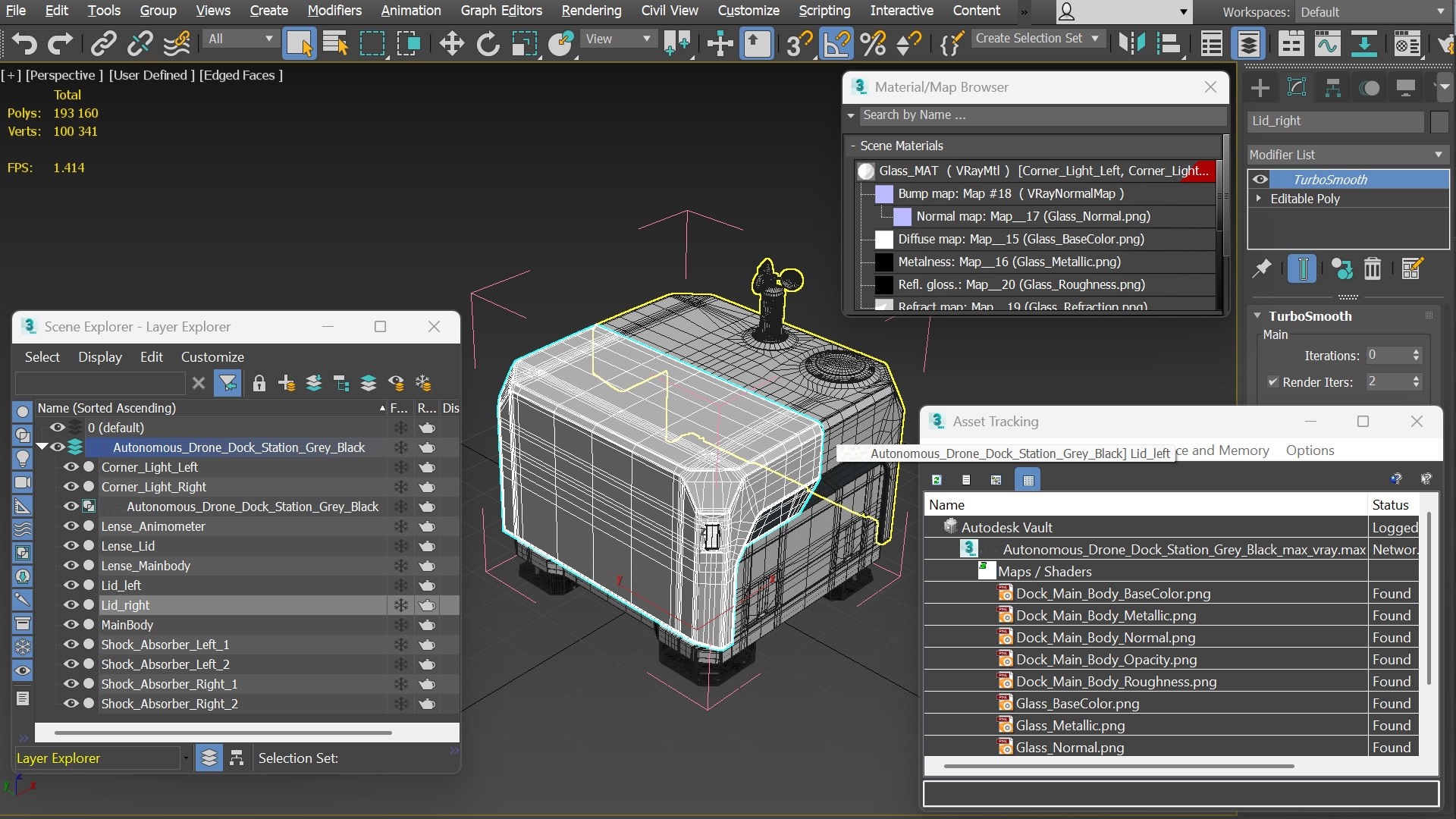
Autonomous drone dock — 3D model and engineering view
Dock · 3D model Engineering view of the dock — body, lids, shock absorbers and sensor mast. dock-capabilities.jpeg
From sketch to engineered build — the dock taking shape in 3D.
How it works

One mission loop, fully autonomous.

Watch a single mission: the dock releases the drone, it flies to the scene, streams a live feed to the command center, and returns — over and over, with no one in the field.

Dock Scene Command center live feed ›››
1TriggerA 112 call or scheduled mission wakes the dock.
2DeployThe drone launches and flies to the scene on its own.
3StreamLive HD + thermal feed reaches the command center.
4ReturnMission done, it flies home and recharges.

System framework

How dock, drone, cloud and command center connect — end to end.

internet + fallback link Triggers 112 call Scheduled mission Manual dispatch Dock Charge · climate RTK · weather Comms relay · 360° Drone HD + thermal Onboard AI Autonomous flight Cloud / AI Detection · counts Orthomosaic 3D digital twin Command center Live feed · GIS Pilot oversight AI reports TRIGGER IN THE FIELD COMMAND & CONTROL ‹‹‹ tasking & next mission
ADispatchA call or scheduled job wakes the nearest dock.
BCaptureThe drone flies and streams HD + thermal in real time.
CProcessCloud AI turns the feed into detections, maps and twins.
DDecideThe command center acts — and tasks the next mission.
The technology is real

Vision. Brain. Mechanics.

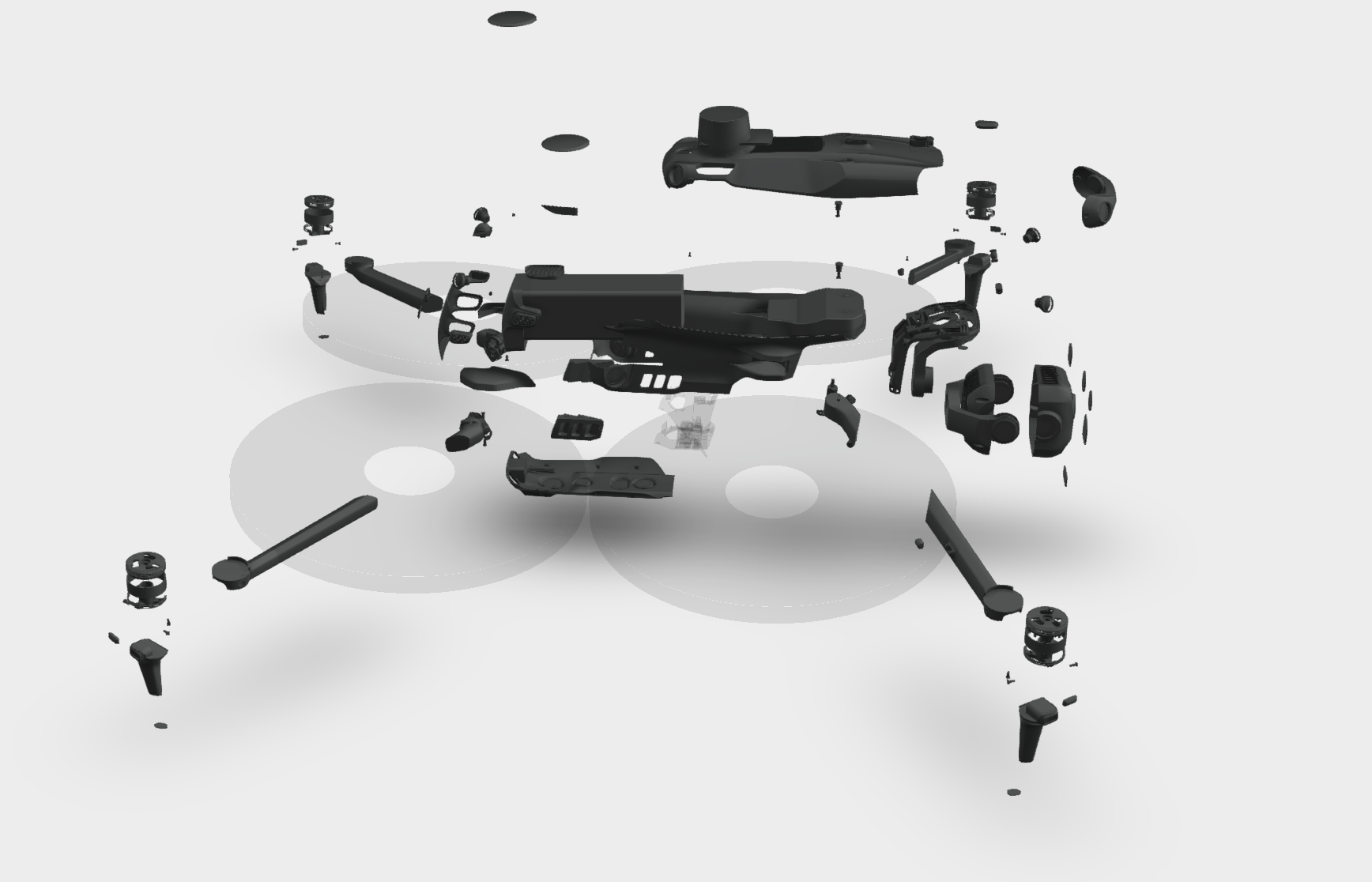
Full autonomy comes from three layers working together. Tap a layer to see what's inside.

Drone exploded view — components and subsystems
Sketch · Drone exploded view Exploded illustration: rotors, frame, gimbal/camera, compute module, battery — labelled by layer. drone-exploded.png
Vision

It sees

Sensor fusion across camera and thermal, with onboard image-signal processing for a clear picture day or night.

Brain

It understands

Onboard compute and visual odometry, with AI that detects and counts people and vehicles in real time.

Mechanics

It acts

Robust propulsion, smart power management, and built-in redundancy — BVLOS compliant and spoof-free comms.

Where it's used

One platform, two markets.

Public safety

When every second counts

  • A 112 call comes in — the nearest drone deploys automatically.
  • Eyes on the scene in 5–10 minutes, before responders arrive.
  • Live, multi-angle feed streamed to the command center.
  • Thermal vision adds capability that simply wasn't there before.

Construction — roads & bridges

Accountability, every single day

  • Automated daily missions track on-site progress.
  • High-res orthomosaics and a 3D digital twin for volumetric measurement.
  • AI acts as a site engineer — reports, feedback, accountability.
  • Connects to BOQ and project plans; flags delays and safety issues.

The interface — public safety

What the command center sees during a live mission.

Integrated drone control console — live camera feed with AI object tracking, situational map view, and hardware data
UI · Integrated control console Three-screen console: live camera feed & AI object tracking, situational map view, and hardware data. ps-console.png
One console — live feed & AI tracking, situational map, and full hardware telemetry.

The interface — construction progress

Supervised flights in, engineer-ready reports out — automated in between.

1Supervised flightPilots oversee a scheduled daily flight; the drone flies the plan on its own and collects the imagery.
2Cloud processingAutomated pipelines stitch the imagery into a 1 mm orthophoto (2.5D) and a full 3D model of the site.
3AI site engineerAn agentic AI checks the site visually and volumetrically against CAD, BOQ, plan and timeline — then writes the progress report.
4Act & shareEngineers resolve every flagged issue, document it, and push clear actions to contractors and stakeholders.

Compare any two days

Slide between two days' orthophotos to see exactly what changed. Measure length, area, volume and cross-section to compare site conditions over time.

Weather-aware guidance

The AI site engineer reads the forecast and flags anything that needs to be addressed before the weather turns.

Reports they already use

Most importantly, output lands in the exact format site engineers work in today — ready to review, no translation needed.

2 → 1
Two markets served by one autonomous platform.
24 / 7
Always-on coverage replaces ad-hoc, on-call pilots.
Per-mission
Recurring economics that scale across thousands of flights.
The path

More autonomous with every version.

Version 1

Semi-autonomous

Drone flies missions with a pilot overseeing from the command center. Live feed, marked targets, guided routes.

Version 2

Mostly autonomous

Routine missions run on their own. The system handles deployment, framing, and return; humans handle exceptions.

Version 3

Fully autonomous

Fleets operate hands-off across both markets — eyes in the sky, on demand, at scale.

Eyes in the sky.
Where and when you want.

We're building the autonomous aerial layer for safety and infrastructure. Let's talk about building it together.

info@aer-intel.com Aerial Intelligence